Wood Flooring Built for Santa Fe's Dry Air

Refinishing, repair and new hardwood floors, planned around real moisture readings and a written indoor humidity target.

Santa Fe Wood Flooring brings 20+ years of wood flooring work to Santa Fe, NM: floor refinishing, hardwood floor repair, new hardwood and engineered hardwood installation, water damage, subfloor repair, wide plank and reclaimed boards, and replacing carpet or tile with wood. We work on the floors Santa Fe actually has, from oak strip in older in-town houses to engineered plank over hydronic radiant heat in a newer Santa Fe Style home.

Most of what goes wrong with a wood floor here starts as a moisture question rather than a workmanship one. Heated winter air pulls water out of the boards, gaps open, and a floor that looked tight in September squeaks by January. That is why every job starts with a wood moisture meter, readings in the boards and the subfloor, and a written indoor relative humidity target before anything is sanded or ordered.

Whether you own the house, rent it out, manage a short-term rental or are getting it ready to list, the aim is the same: a floor that stays flat and closed through the dry months and the monsoon, with a finish suited to how the rooms are used. The sections below walk through the problems we see most, how each gets fixed and what to plan for.

Get Your Free Quote

Fast response • No obligation

So we can reach you about your request.

So we can send you a confirmation after you submit this inquiry form.

  • 20+ Years Experience
  • Written Moisture Readings
  • Itemized Written Estimates

What we do

Our Services

Wood floor refinishing, repair and installation in Santa Fe, NM

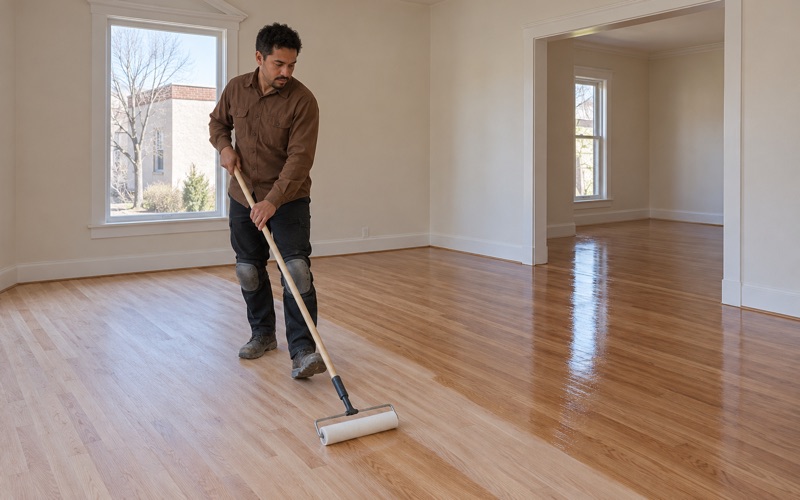
Worker walking backwards while rolling clear finish across sanded oak in the living room of a Santa Fe Style house.

Wood Floor Refinishing

Full sand and refinish or screen and recoat, with stain samples tested on your floor and a written cure schedule for every room.

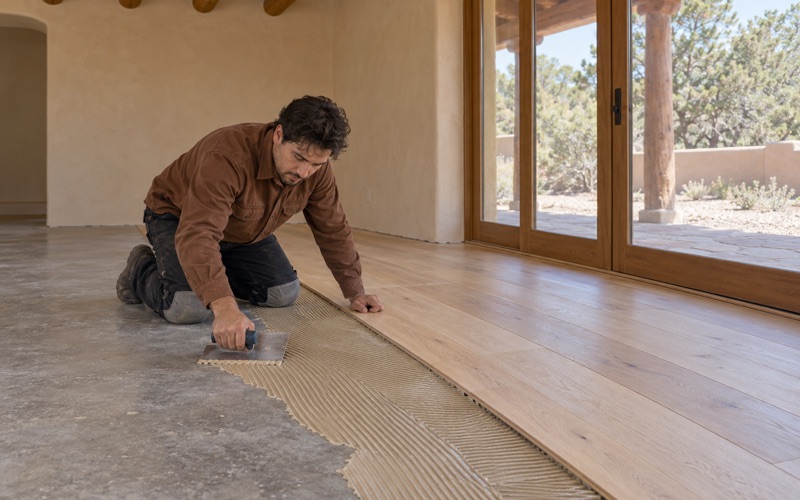
Worker troweling adhesive onto a concrete floor for engineered hardwood planks in a Santa Fe home.

Engineered Hardwood Flooring

Engineered hardwood installed over radiant heat, concrete slabs and plywood, planned to NWFA limits with slab moisture tests first.

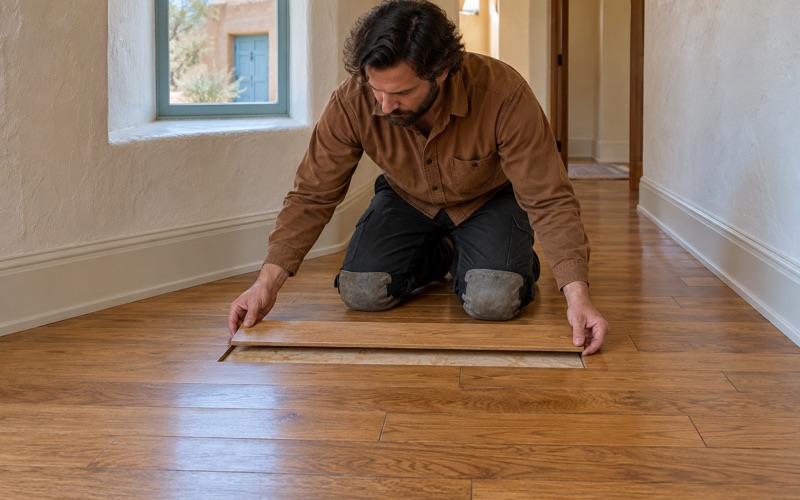
Worker lowering a replacement oak board into a staggered repair where an old floor furnace was removed in a Santa Fe house.

Hardwood Floor Repair

Repairs for gaps, cracked and split boards, squeaks, pet stains and old floor furnace openings, woven into the floor you already have.

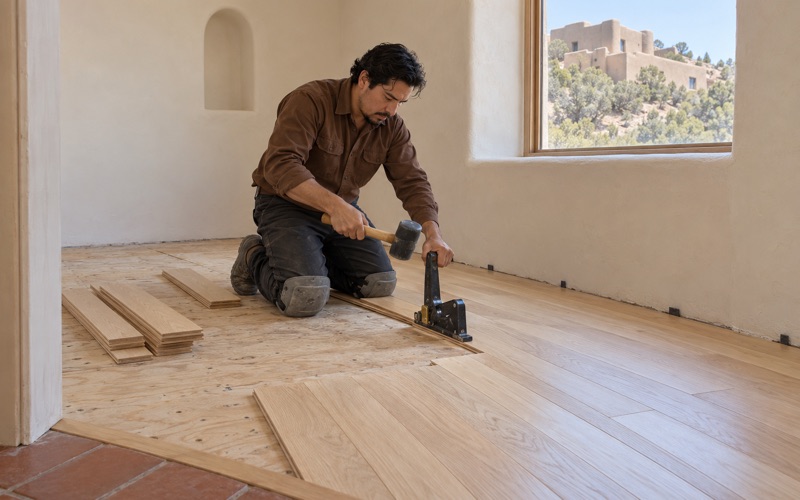
Worker nailing new solid oak strip flooring over a plywood subfloor in a Santa Fe Style bedroom.

Hardwood Floor Installation

Solid and engineered hardwood installed nail-down, glue-down or floating, acclimated to the house and priced on an itemized estimate.

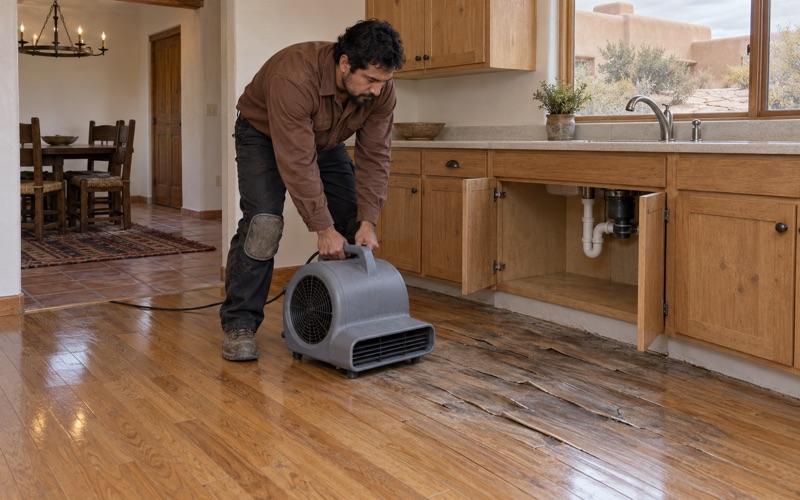
Worker setting an air mover beside cupped oak boards in front of a kitchen sink cabinet after a leak in a Santa Fe house.

Hardwood Floor Water Damage

Wet, cupped or buckled wood floors traced to the leak, moisture mapped and photographed for your adjuster, then dried or replaced.

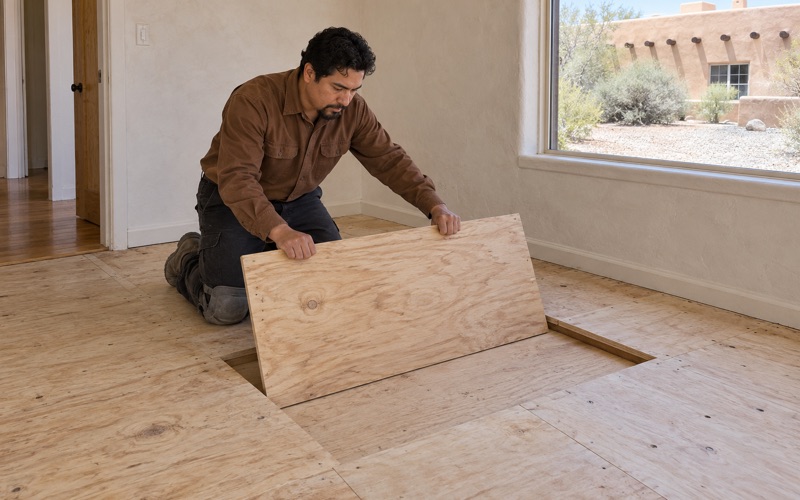
Worker lowering a new plywood panel into place in the subfloor before new hardwood goes down in a Santa Fe home.

Subfloor Repair

Soft spots, rotted panels, squeaks and uneven subfloors repaired and flattened so the floor on top stays tight and quiet.

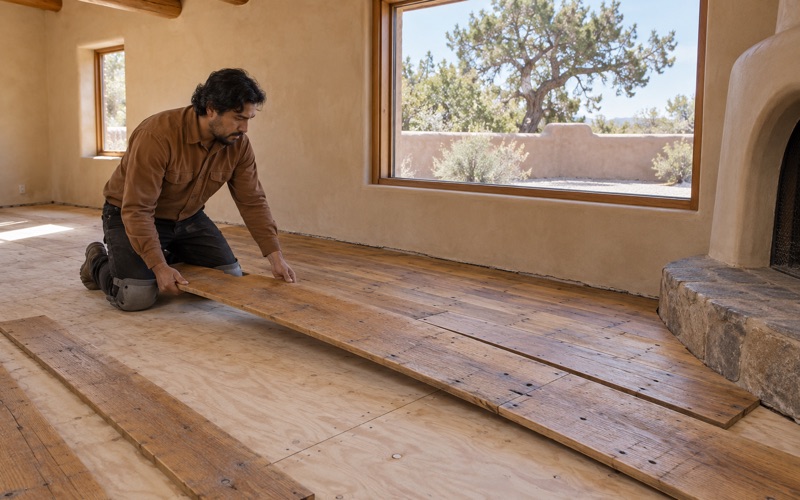
Worker laying a long reclaimed wide pine plank into a dry layout under the vigas of a Santa Fe living room.

Wide Plank Hardwood Flooring

Wide plank pine, oak and reclaimed wood floors, acclimated to the house and fastened for their width so they stay flat through dry winters.

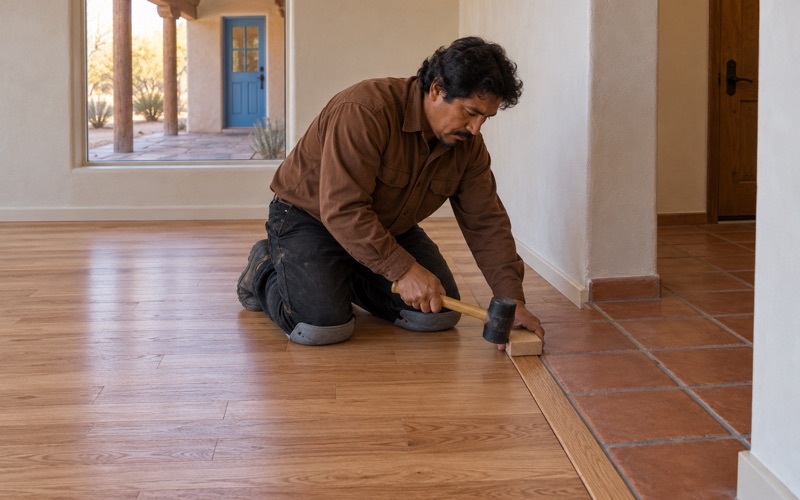
Worker tapping new oak boards tight where the new wood floor meets Saltillo tile in a Santa Fe house.

Replace Carpet With Hardwood

Carpet, Saltillo tile or brick taken up and replaced with hardwood, with the slab tested and every doorway transition planned in advance.

Twenty Years Working With Wood Floors

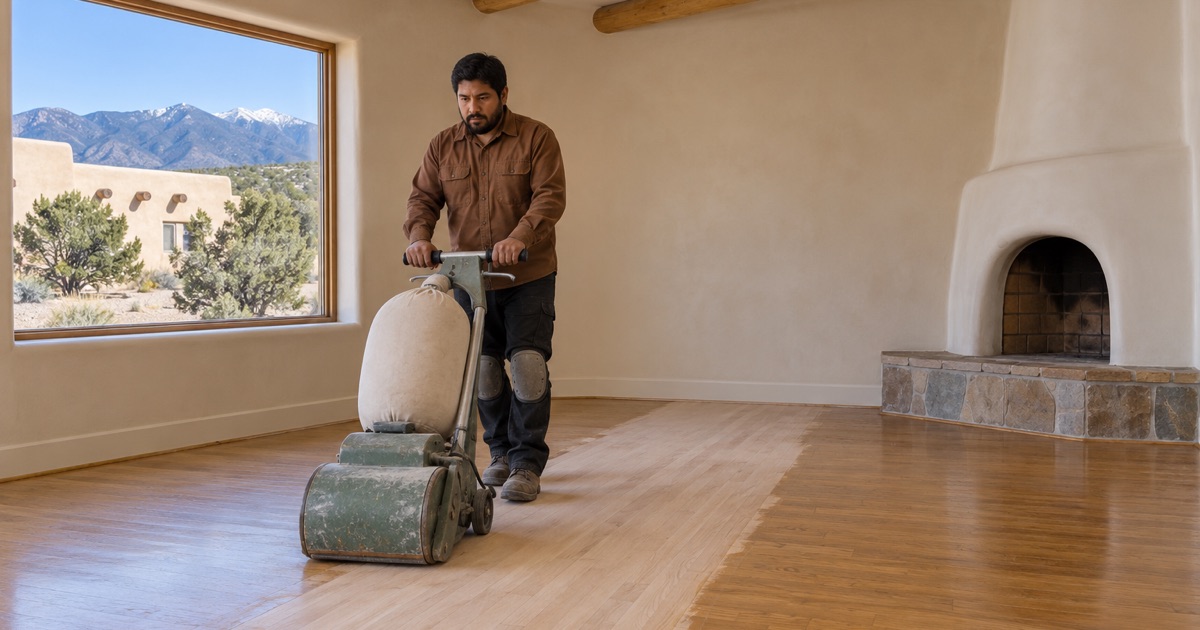
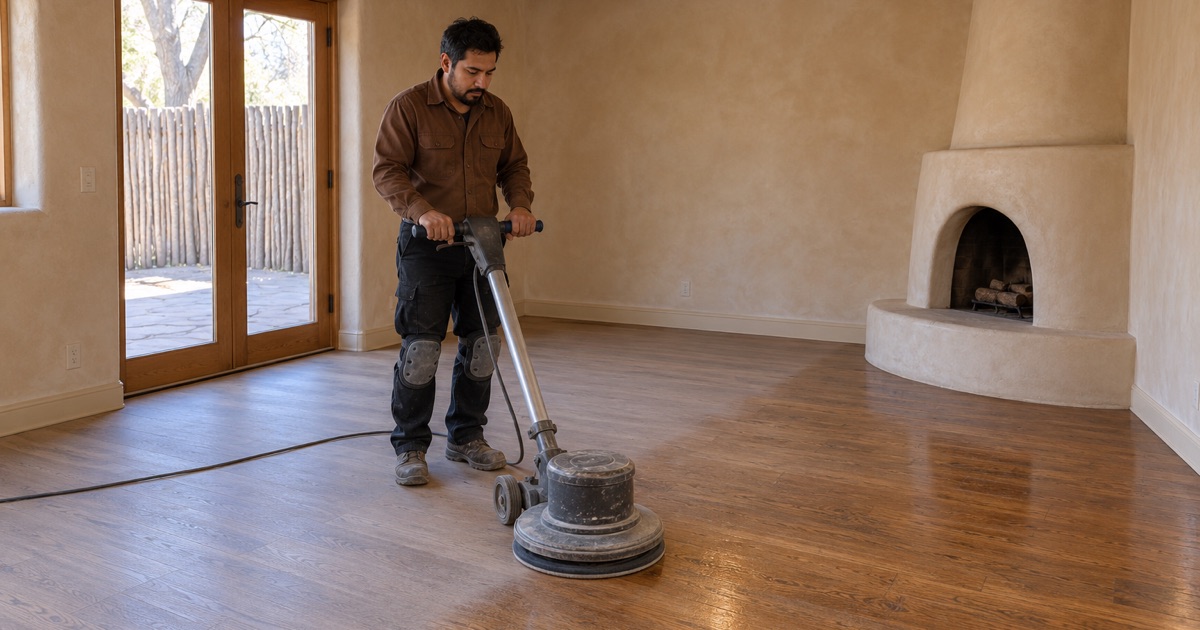
Worker guiding a drum sander along oak strip flooring beneath the vigas of a Santa Fe Style great room.

20+ Years in Wood Flooring

Our crews have been sanding, repairing and laying wood floors for more than twenty years. That time is what lets us tell a seasonal gap from a failing subfloor on the first visit, and it is why that visit is about diagnosis and measurement rather than a pitch for new material you may not need.

Why Choose Santa Fe Wood Flooring

Humidity Diagnosed First

Every gap, check or winter squeak gets a moisture reading and a written indoor humidity target before any floor repair is quoted, because Santa Fe’s heating-season air dries boards out, so the fix addresses the cause rather than filling cracks that reopen by next January the way a quick putty job does.

Radiant Heat to NWFA Limits

No wood floor goes over hydronic radiant heat without a plan built on the NWFA radiant heat guidelines, which cap the floor surface at 80 degrees Fahrenheit and limit changes to 5 degrees a day, so the boards are not baked into cracking rather than laid and left to whatever the thermostat does.

Moisture Readings on Paper

Nothing gets ordered until the wood, the subfloor and any concrete slab have been tested and the numbers written down, so a slab still releasing moisture is caught before a new floor cups on it rather than discovered after the installer has packed up and gone.

Clean Saltillo Tile Transitions

Wherever new wood meets Saltillo tile, brick or flagstone, the height difference is measured and the transition planned before the first board goes down, so the doorway ends flush or finished with a proper reducer rather than a lip that catches toes and a gap that collects grit.

Floor Furnace Patches That Vanish

Never a square plug of new wood dropped into an old floor furnace opening: boards are woven into the surrounding rows at staggered lengths, so the repair reads as part of the original hardwood floor rather than a patch outlined in a different color for the life of the house.

When Dry Air or Water Goes After the Floor

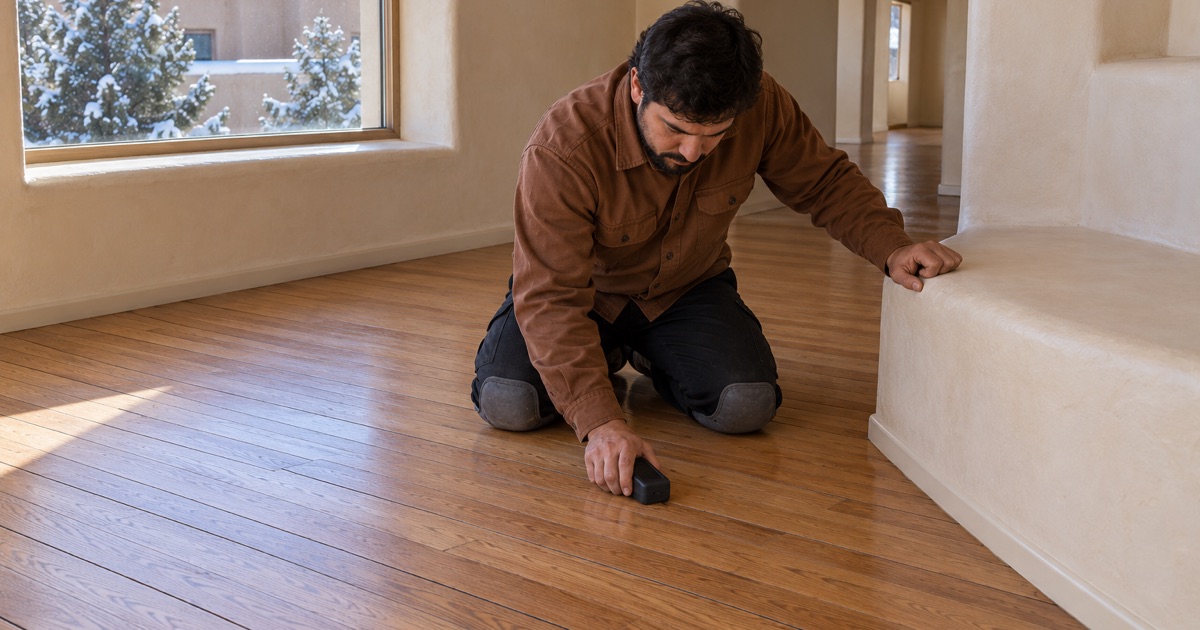
Worker pressing a moisture meter onto oak boards with seasonal winter gaps in a heated Santa Fe living room.

Winter Gaps Between Hardwood Boards

Gaps that open between boards when the heat comes on are the most common call we get, and in most houses they are seasonal shrinkage rather than a failed installation. We measure the wood’s moisture content and the room’s relative humidity before recommending anything. Filling a seasonal gap with putty looks fine until spring, when the boards swell back and push the filler out.

Checking, Cracking and Splitting Boards

Checking is the fine cracking along the grain that appears when a board’s surface dries faster than its core, and on wide boards it can deepen into a split. We identify which boards are only checked and which have split through, then decide between refinishing and board replacement. Treating every crack as a replacement job throws away sound wood.

Squeaks When the Heat Comes On

A floor that stays quiet all summer and starts squeaking in the heating months is usually telling you the boards have shrunk and are rubbing on their fasteners. We check humidity first, then look at the subfloor and floor joists from below where there is access. Driving extra nails without addressing the dryness only moves the squeak a few feet over.

The Indoor Humidity a Wood Floor Needs

The NWFA guidance for radiant installations calls for keeping indoor relative humidity between 30 and 50 percent, and that range is a useful target for any wood floor in a dry climate. We write a target for your house and explain whether a whole-house humidifier makes sense. A floor kept inside its range moves far less than one left to the weather.

Cupped Boards After a Wet Summer

Cupping, where board edges sit higher than their centers, means moisture is reaching the underside of the floor faster than the top. After a wet monsoon season it can come from a crawlspace, a slab or a plumbing leak, and we trace the source with a moisture meter before touching the surface. Sanding a cupped floor flat before it dries out leaves it crowned later.

Radiant Heat Line Leaks Under Wood

A leak in a hydronic radiant line under a wood floor often shows first as a warm, damp patch or a few boards buckling in one area. We map the wet zone with moisture readings and coordinate with the plumber who has to open the slab or subfloor. Lifting only the boards over the leak, and saving them where we can, keeps the repair small.

Dishwasher, Refrigerator and Water Heater Leaks

Water from a dishwasher, an icemaker supply line or a water heater tends to travel under the boards well past the visible puddle. We read moisture across the whole area, photograph the readings and dry or remove what cannot be saved. Replacing only the stained boards while wet wood sits beside them is how a small leak turns into a second repair.

Sun Fading Under Big Windows

Strong sun through large south and west windows fades and yellows both finish and wood, and it leaves a pale rectangle wherever a rug used to lie. Sanding removes the discolored layer, and we talk through finish and window-treatment choices that slow it the next time. Spot-sanding one area rarely blends into the older floor around it, so we plan whole rooms.

Pet Urine Stains in the Wood

Pet urine that sits on a floor soaks past the finish and turns the wood gray or black, and sanding alone rarely lifts it once it has gone deep. We test how far the stain has penetrated, then decide between sanding, bleaching and replacing the affected boards. A clean board replacement is often a better result than chasing a stain through three sandings.

Peeling or Worn-Through Floor Finish

Finish that peels in sheets usually means a new coat went over wax, oil soap residue or a finish it could not bond to, while finish worn through in traffic lanes is simply age. We tell the two apart before quoting, because peeling polyurethane needs a full sand while worn but intact finish may only need a screen and recoat.

Refinishing and Repairing the Floor You Have

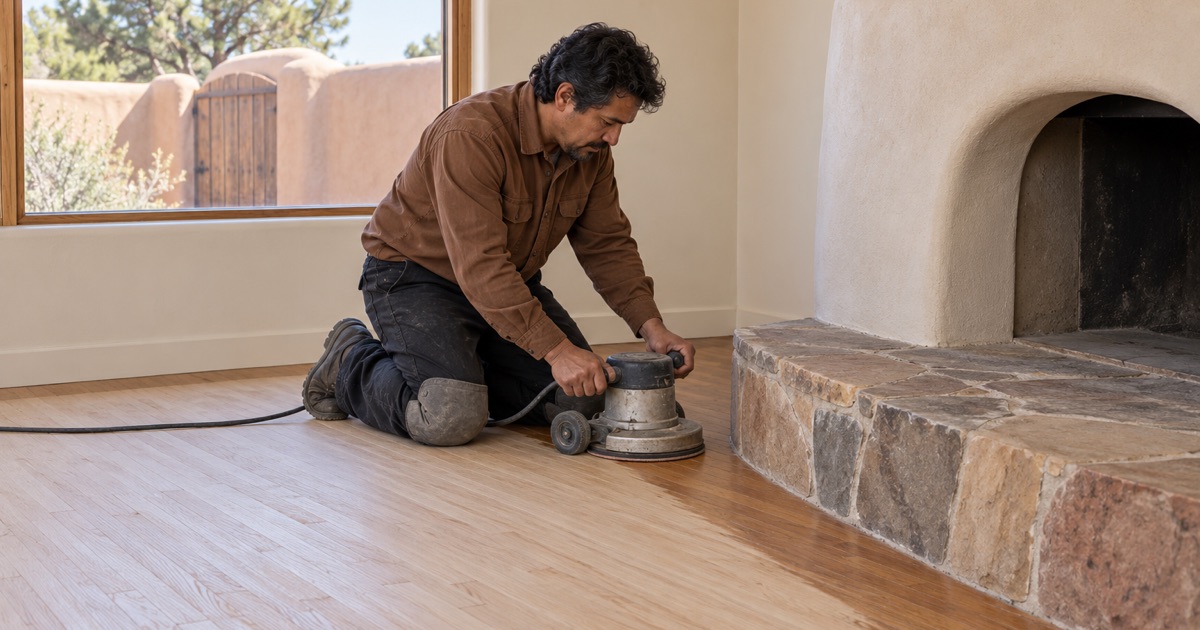
Worker running an edger along the flagstone hearth border of an oak floor being sanded in a Santa Fe home.

Full Sand and Refinish or Screen and Recoat

A full sand takes the floor down to bare wood with a drum sander, an edger and a grit sequence, removing scratches, stains and old color. A screen and recoat abrades only the existing finish and adds a fresh coat. We recommend the recoat whenever the wood itself is undamaged, since it saves a full sanding for later in the floor’s life.

Dustless Sanding in an Occupied House

A dustless sanding system connects the drum sander and edger to a vacuum that captures most of the dust at the machine. We still seal off doorways and HVAC returns, because no system catches everything and fine dust travels through a house. It is the right choice when you are living at home through the work.

How Many Sandings a Floor Has Left

Solid hardwood can usually be sanded several times over its life, while engineered flooring depends on its wear layer thickness. We pull a floor register or check an exposed edge to measure how much wood is left above the tongue. Sanding blind on a thin wear layer risks breaking through to the core, which cannot be refinished.

Patching an Old Floor Furnace Opening

Many older Santa Fe houses had a floor furnace or a wall heater that was later removed, leaving a rectangular hole framed into the floor. We frame the opening properly, then weave new boards into the surrounding rows at staggered lengths. Matched in species and width and sanded with the rest, the repair disappears once the floor is finished.

Hardwood Board Replacement That Blends In

When individual boards are split, stained or water damaged, we cut them out and replace them with matching stock rather than laying a new section over the top. The replacement boards are interlaced with the existing rows so no straight seam shows. Sourcing matching species and width matters more than the carpentry, so we check supply before we cut.

Finding Hardwood Under Old Carpet

Allen Stamm built several thousand homes in and around Santa Fe between 1939 and 1980, and accounts of them describe hardwood floors, so many of those houses have oak under the carpet. We lift a corner, check the condition and thickness and tell you whether refinishing is realistic. Tack strip holes and pad staples are routine to repair.

Stain Colors and Why Old Oak Turns Orange

Older red oak floors turn orange as oil-based finishes amber with age and sunlight. Sanding to bare wood removes that tone, and we test stain samples on your actual floor, because the same color reads differently on red oak, white oak and maple. Maple and some pines take stain unevenly, so we plan for a conditioner or a natural finish.

Waterborne or Oil-Modified Polyurethane

Waterborne polyurethane dries clear, has less odor and lets rooms reopen sooner, while oil-modified polyurethane adds an amber tone and takes longer to cure. Hardwax oil finishes are a third option that can be spot-repaired. We choose products that meet the federal VOC limits in 40 CFR 59 Subpart D and match the sheen level to traffic and pets.

Lead-Safe Sanding in Pre-1978 Houses

In Santa Fe, 39.8 percent of housing units were built before 1980, and old finishes and paint in pre-1978 housing can contain lead. Before sanding in those houses we follow lead-safe work practices under the EPA Renovation, Repair and Painting rule, which the EPA administers directly in New Mexico. Containment and careful cleaning matter because sanding turns old finish into fine dust.

Walk-On and Furniture Times After Refinishing

Most waterborne finishes allow sock traffic within a day, with furniture back after a few days and rugs held off longer while the finish fully cures. Oil-modified finishes take longer at each step. We give you a written cure schedule for the product on your floor, since the timeline depends on the finish, the number of coats and the temperature in the house.

New Wood Floors for a Santa Fe House

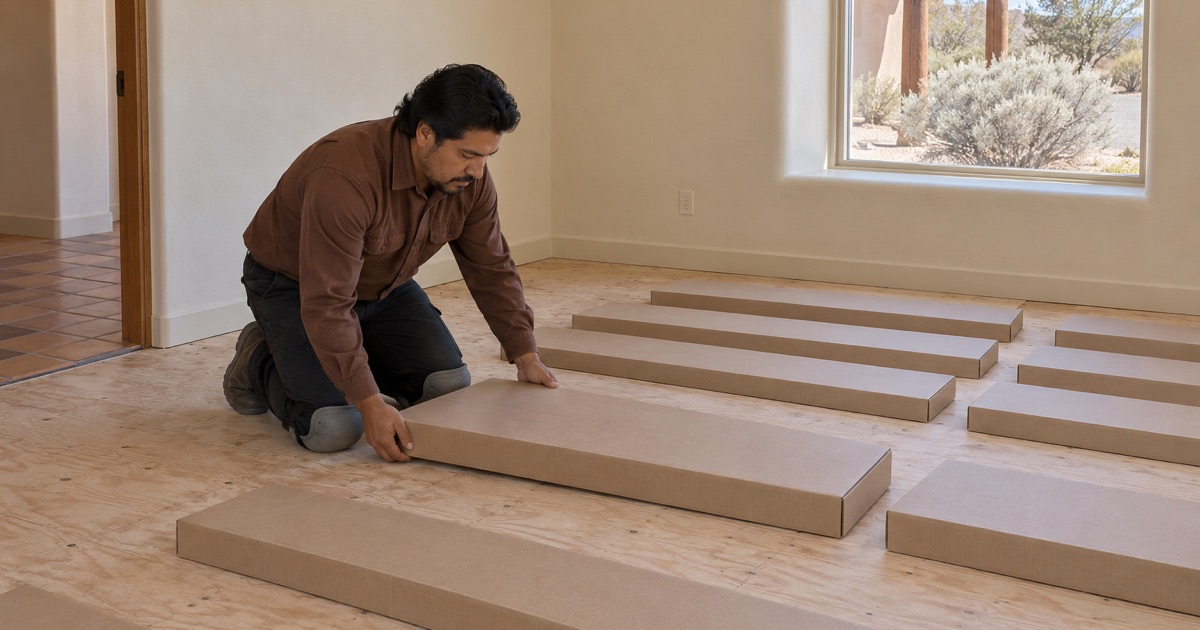
Worker laying unmarked cartons of new oak flooring flat to acclimate in the empty room of a Santa Fe house.

Engineered Hardwood Over Radiant Heat

Engineered hardwood is the usual choice over hydronic radiant floor heating because its cross-layered core resists the shrinking a solid board shows over heat. The NWFA radiant heat guidelines cap the floor surface at 80 degrees Fahrenheit, limit temperature changes to 5 degrees a day and rule out setback thermostats. We plan the installation method and the start-up schedule around those limits.

Solid or Engineered Hardwood in Dry Air

Solid hardwood can be sanded more times and suits a wood-framed subfloor, while engineered core construction moves less when humidity swings. In a dry climate, narrower solid boards and well-made engineered planks both perform when the house is held within its humidity range. We recommend by subfloor, heat source and board width rather than by a blanket rule.

Replacing Saltillo Tile or Brick With Wood

Replacing Saltillo tile or a brick floor with wood means dealing with a thick mortar bed and often a concrete slab underneath. We remove the old floor, check the slab’s flatness and moisture, and plan the new floor height against the rooms that keep their tile. Skipping the moisture test on an old slab is the fastest route to a cupped floor.

Carpet to Hardwood Conversions

Replacing carpet with hardwood starts with what is underneath: a plywood subfloor, an OSB subfloor or a concrete slab each call for a different installation method. We check flatness and fasteners, then match the new floor height to adjoining rooms and door clearances. Tack strip and pad staples come out completely so nothing telegraphs through the new boards.

Wide Plank Pine and Reclaimed Wood Flooring

Wide plank pine and reclaimed wood suit Territorial and Pueblo Revival interiors, and reclaimed stock is sold by suppliers in and around Santa Fe. Wider boards move more across their width, so we check each delivery’s moisture content, plan fasteners and adhesive for the width and set expectations for some seasonal gapping. Reclaimed boards also get checked for old nails before they meet a saw.

Mesquite and Other Stable Species

NWFA data lists mesquite among the most dimensionally stable species, with a shrinkage value of 3.2, which is why it holds up where humidity swings. White oak, hickory and maple are far easier to source. We compare species on stability and on the Janka hardness rating together, since a very hard wood that moves a lot will still gap.

Acclimating New Wood Before Installation

Wood milled and stored somewhere wetter arrives carrying more moisture than it will hold in a heated Santa Fe house. We read the wood and the subfloor with a moisture meter and acclimate until they fall within the range the NWFA installation guidelines call for, rather than waiting a fixed number of days. Rushing this step is how new floors gap in their first winter.

Moisture Testing a Concrete Slab

Before wood or engineered flooring goes on a concrete slab, we test the slab with a calcium chloride moisture test or an in-situ relative humidity test under ASTM F2170. The result decides whether the floor needs a vapor retarder, a glue-down system rated for the reading or more drying time. We write the readings down and keep them with your estimate.

Where Wood Meets Tile, Brick or Flagstone

Where wood meets tile, brick or a flagstone floor, the two surfaces rarely sit at the same height or move the same way. We choose between a flush transition, a reducer strip and a T-molding from the measured height difference, and we leave the expansion gap the wood needs. A doorway lip is a trip hazard and the first place a finish chips.

Hardwood Installation Cost per Square Foot

Published price averages for this area disagree with each other, so we price from your house rather than from a national figure. The cost per square foot turns on species and width, solid against engineered, subfloor or slab preparation, old floor removal, transitions and the finish. New Mexico gross receipts tax also applies to labor, and our itemized estimates show it on its own line.

Owning, Renting and Selling in Santa Fe

Worker running a floor buffer with a screen pad across the oak floor of a small Santa Fe casita between guest stays.

Insurance Claims on a Wet Wood Floor

When a wet floor becomes an insurance claim, the adjuster needs to see how far the water went, and moisture readings and photographs taken before tear-out are the evidence. We document the affected area, the readings and the source so your adjuster has something concrete to work from. What a policy covers stays between you and your insurer, and we make no promises about it.

Short-Term Rental Floor Turnovers

Santa Fe caps residential short-term rental permits at 1,000, so a permitted unit sitting empty for floor work is expensive. We schedule refinishing and repairs into the gap between bookings and hand you a written cure schedule with the date furniture can go back and guests can return. A recoat can often fit a short window where a full sand cannot.

Floor Damage, Deposits and the 30-Day Rule

Under the Uniform Owner-Resident Relations Act, a New Mexico landlord has 30 days to give a tenant an itemized list of deductions and cannot charge for normal wear and tear. Our written, itemized floor estimates separate damage from ordinary wear so the figures are clear. We describe what we find; the decision on what is chargeable stays with you.

Condominium Declarations and Hard Floors

Under the New Mexico Condominium Act, an owner can generally alter a unit’s interior when structure and mechanical systems are unaffected, and the declaration governs beyond that. Associations often add their own rules on hard flooring and underlayment for sound between units. We read the declaration and any flooring rules with you before ordering, so the floor is approved the first time.

Floor Refinishing Before Listing a House

A refinished floor photographs well and is among the more visible changes an owner can make before a sale. We recommend the least work that gets the result, often a screen and recoat or targeted board replacement rather than a full sand, and schedule it ahead of the listing photographs with cure time built into the timeline.

Floor Work While You Are Out of Town

Santa Fe has a large number of houses held for seasonal or occasional use, 2,030 units in the latest Census count, and many owners are away when a floor needs attention. We work from photographs and moisture readings you can review remotely, coordinate access with a property manager or neighbor, and send photos at each stage of the job.

Wood Floors in Santa Fe’s Historic Districts

Santa Fe has five historic districts, and the Historic Preservation Division’s published review examples are exterior items such as roofs, windows and stucco. Interior floor work is not named in those lists, but we confirm with the division before starting when a project also touches doors, windows or exterior walls. Original floors in older houses get repaired rather than replaced whenever the wood allows.

New Mexico Contractor Rules for Floor Work

New Mexico’s contractor classifications in 14.6.6 NMAC do not include a separate flooring classification, and questions about which license covers a project go to the Construction Industries Division. The state’s handyman exemption is limited to $7,200 a year in total for someone who does not advertise. Under state law an unlicensed contractor cannot sue for payment or file a lien, so ask before you hire.

Areas We Serve

Santa Fe Wood Flooring provides wood-flooring throughout the greater Santa Fe area, with the same crews and the same standards on every job.

Good to know

Frequently Asked Questions

How long does a typical floor refinishing job take?

Most refinishing projects run a few days from the first sanding pass to the final coat, followed by cure time before furniture returns. The size of the floor, the number of coats and whether the finish is waterborne or oil-modified all change the schedule, and we put the dates in writing before any work begins so you can plan around them.

What goes into your written estimates?

Every estimate is written and itemized. Removal of the old floor, subfloor or slab preparation, material, installation, transitions, finish and gross receipts tax appear as separate lines, and the moisture readings taken at the visit are attached, so you can see exactly why each line is there and compare it fairly against another bid.

Can you match my existing floor for a repair?

Usually, yes. We identify the species, the board width and the thickness, then source matching stock and weave it into the existing rows. Older floors that have been sanded several times can be thinner than new boards, so we measure before ordering, and sanding and finishing the repair together with the surrounding floor is what makes the color line up.

Is engineered hardwood real wood?

Yes. Engineered hardwood has a real hardwood wear layer bonded to a cross-layered core. The thickness of that wear layer decides how many times the floor can be sanded in the future, so we check it on any product we recommend and tell you plainly whether a given plank can be refinished later or only recoated.

Should I run a humidifier for my wood floor?

In many Santa Fe houses a humidifier is the difference between a floor that gaps every winter and one that stays mostly closed. A whole-house humidifier on the heating system is steadier than portable units. We measure the room first and recommend one only when the readings show the house is running drier than the floor can tolerate.

Does asking my insurer about floor damage count as a claim?

New Mexico's Office of Superintendent of Insurance has said that an inquiry about damage is not a claim when no payment is made. That can make it easier to ask a question before deciding whether to file. We document the damage and the moisture readings either way, so the evidence is ready if you do open a claim.

Will you install reclaimed wood that I buy myself?

Yes, as long as it passes the same checks as any other material. We read its moisture content, look for old nails and metal, check milling and thickness for consistency and let it acclimate in the house. If a batch is too wet or too uneven to lay well, we tell you before installation rather than after the first winter.

How should I clean a newly refinished floor?

Use a dry microfiber mop for grit and a cleaner made for the finish on your floor. Avoid steam mops, oil soaps and wax on polyurethane, because the residue they leave is one of the most common reasons a later recoat fails to bond. Felt pads under furniture and mats at exterior doors keep sand off the finish.

Do you remove and haul away the old flooring?

Yes. Removal of carpet, pad, tack strip, old wood, tile or vinyl is quoted as its own line, along with disposal. Tile and brick removal takes longer than carpet because of the mortar bed underneath, and we account for that in the schedule so the installation days stay where we said they would be.

Ready to Get Started?

Request a free quote today and we'll get back to you fast.